
Steel Toes & Plaid
This morning started with my husband waking me up.
“Michelle, where is your key fob?”
I had left the windows down in my car overnight.
Not because I forgot.
Because rain was coming, and somewhere between noticing it and acting on it, I went to bed.
By morning, the rain had arrived.
Steve wanted to close the windows before the next round moved through and saved me from a wetter car seat.
A small act.
A normal act.
The kind of thing that happens quietly in healthy relationships.
When you’ve been together long enough, love often looks less like grand gestures and more like someone asking where your keys are before the sun rises and the house begins to stir.
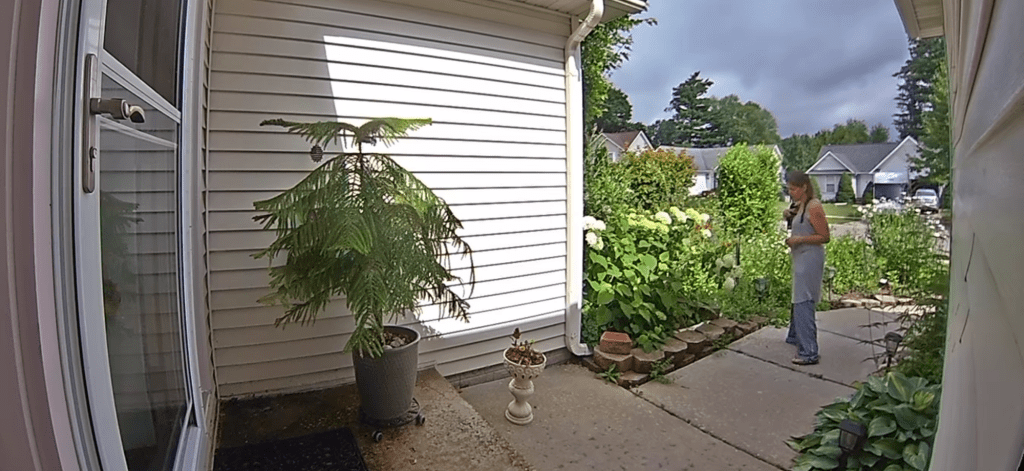
Afterward, I walked outside.
The sky was darkening again.
Another storm was building.
I stopped at one of my favorite spots in the garden.
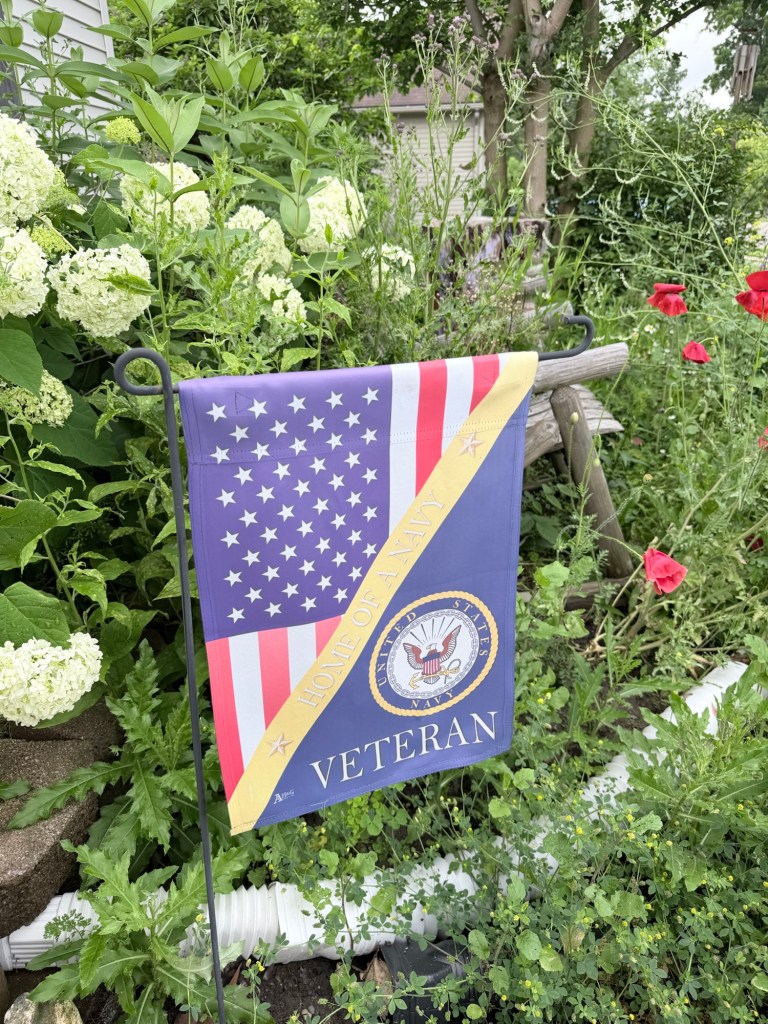
Our United States Navy veteran garden flag.
A simple reminder of who built this life with me.
The flag had shifted slightly, so I straightened it.
Then I noticed I couldn’t really see it anymore.
The view was blocked.
A patch of weeds had grown tall enough to obscure it.
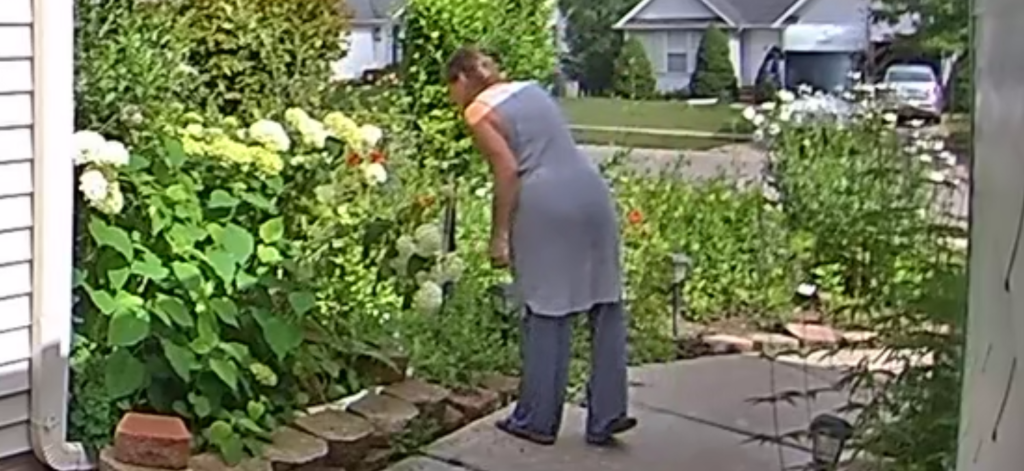
So I bent down and grabbed them.
Immediately, I felt the sting.
Stinging nettle.
Years ago, that would have been the entire story.
The first time I grabbed a mature nettle plant, I panicked.
The needles lodged in my skin.
The burn spread.
I didn’t know what it was.
I didn’t know how to stop it.
I only knew it hurt.
That experience eventually led me into books about foraging, botany, herbal medicine, sustainable agriculture, and regenerative growing practices.
I wanted to understand what had happened.
This morning, when the sting hit, my reaction was very different.
“Oh.”
Pause.
Recognition.
Then a smile.
“Those are just babies.”
The sting wasn’t bad.
In fact, I knew there was a good chance it would help my aching joints more than it would hurt them.
Then I noticed something else.
The view was still blocked.
There were six or eight more plants left.
And that’s when knowledge became useful.
Check for spiders.
Grab near the base.
Swipe upward.
Remove the needles.
Pinch and pull.
Slowly.
Deliberately.
The same movement that clears a nettle plant is one of the exact movements I’ve been rebuilding in my hands.
The pinch.
The grip.
The controlled pressure.
The fine motor work.
Every plant became physical therapy.
Every pull became practice.
Every sting became information.
A few minutes later, the weeds were gone.
The flag was visible.
My hands were stronger.
My joints felt better.
And the garden looked a little more like the sanctuary Steve and I have spent the last decade creating together.
Standing there, I realized something.
The nettle hadn’t changed.
I had.
The sting that once consumed all of my attention had become a small piece of a much larger picture.
I think life works that way too.
Not every discomfort is a wound.
Not every challenge is a crisis.
Not every sting deserves panic.
A wound changes your trajectory.
A sting changes your attention.
Learning the difference may be one of the most important forms of wisdom we ever acquire.
Because once we understand what we’re dealing with, we stop treating every discomfort like a catastrophe.
We assess.
We adapt.
We continue.
The Ring camera caught part of the moment.
A woman standing in her garden.
Adjusting a flag.
Pulling weeds.
Preparing for rain.
Nothing extraordinary.
And yet, that’s exactly where most of life happens.
Not in the grand moments.
In the quiet ones.
The ones where nobody is watching.
The ones where experience turns reaction into understanding.
The ones where we remove a small obstruction and suddenly regain sight of something important.
Sometimes growth isn’t becoming stronger.
Sometimes it’s simply learning that what once felt like a wound was only ever a sting.
 Slingshot Designs