What Happens When You Refuse to Stop Looking for the Root Cause
Today’s post is a blind writing experiment.
Literally.
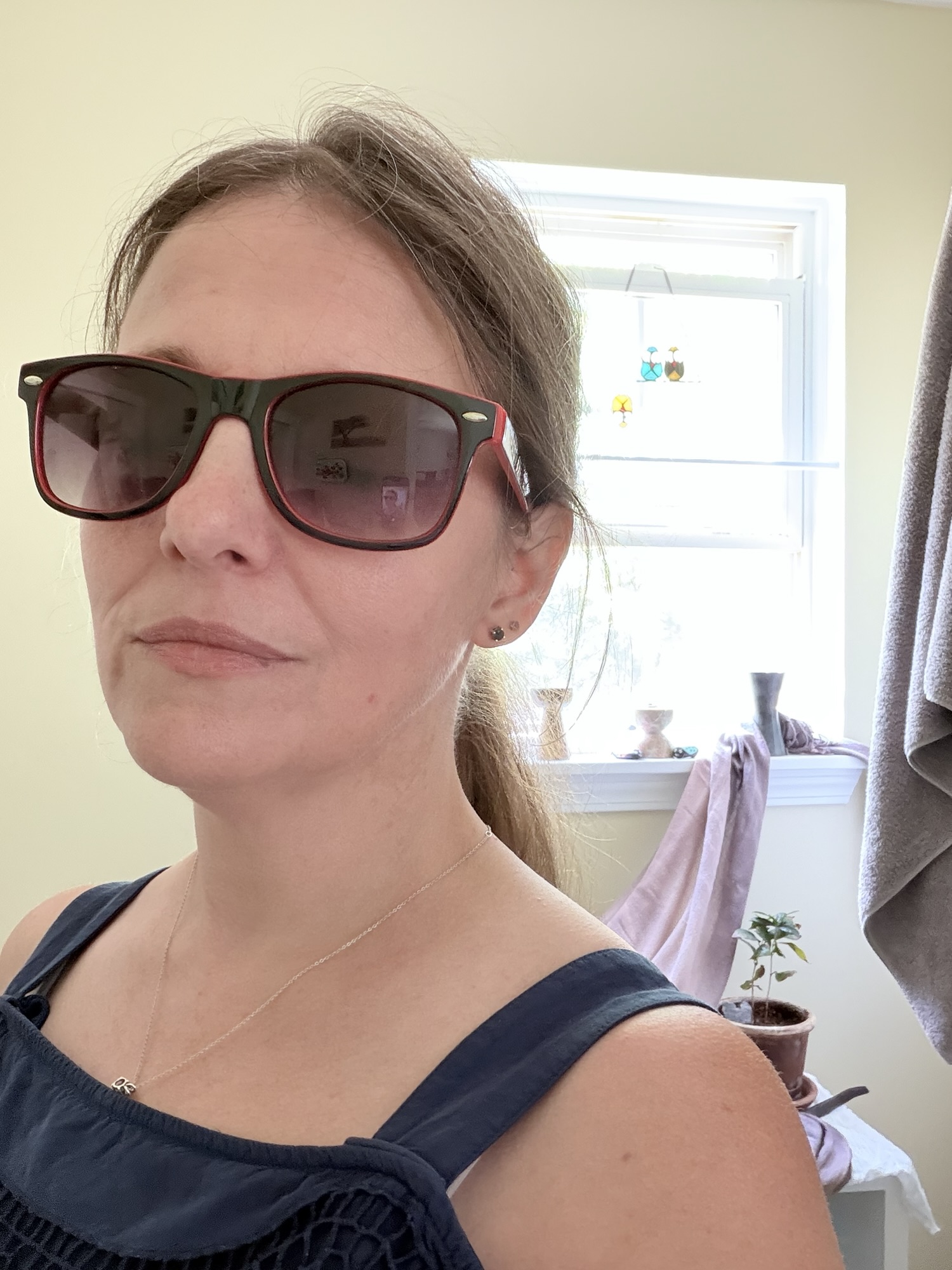
As I write this, my eyes are still dilated from a comprehensive eye exam. I’m wearing the darkest sunglasses I own, sitting in a dim room, and dictating every word into my phone because looking at a screen is still uncomfortable.

A year ago, I couldn’t have done this.
Not because I lacked something to say.
Because many of the tools I relied on to communicate were no longer reliably available to me.
For a writer, losing the ability to comfortably look at screens is a problem.
Losing the use of your hands is a problem.
Losing your ability to think clearly is a problem.
Experiencing all three at the same time is something else entirely.
And yet, here we are.
For years, people assumed I was struggling with stress.
Anxiety.
Allergies.
Burnout.
Behavioral health.
Mental health.
To be clear, all of those things are real.
All of those things deserve treatment.
But they were never the answer to what was happening inside my body.
They were responses.
They were consequences.
They were symptoms.
I knew there was something deeper happening.
That conviction ultimately led me to change healthcare systems, challenge assumptions, seek additional opinions, and continue searching long after it would have been easier to accept the explanations I was being given.
Not because I was being difficult.
Because the explanations didn’t fit the evidence.
Advocating for yourself isn’t arguing with experts.
It’s refusing to abandon your own observations.
It’s being willing to say:
“I hear what you’re saying, but something still doesn’t make sense.”
That process took years.
Almost a decade, if I’m honest.
More than fifteen specialists.
Countless appointments.
Research sessions.
Dead ends.
False starts.
Moments where I questioned myself.
Moments where other people questioned me.
And moments where continuing the search felt almost impossible.
That’s why I hadn’t been back to the eye doctor in years.
The irony is that I never believed my eyesight was failing.
I knew the problem wasn’t my eyes.
I knew something neurological was happening.
I just didn’t know what.
The clues were everywhere.
Screens became harder to tolerate.
Light became painful.
Glare became overwhelming.
Fatigue became relentless.
Pain spread.
Function declined.
My world gradually became smaller because my brain was spending so much energy compensating for something nobody had identified.
Including me.
When my father received a neurological diagnosis of his own, it opened a door.
Not to answers.
To better questions.
I started looking more seriously at neurology.
Eventually, that path led to a vestibular migraine diagnosis.
And suddenly, years of seemingly unrelated symptoms began organizing themselves into a pattern.
Not every answer.
But enough answers to finally begin moving forward.
What makes this difficult to explain is that recovery doesn’t feel like gaining new abilities.
It feels like discovering how much adaptation had become invisible.
I didn’t realize how much effort it took to look at a screen.
I didn’t realize how much energy it took to navigate bright environments.
I didn’t realize how much pain I had normalized.
I didn’t realize how many workarounds I had built into my life just to function.
The compensation became so constant that I stopped seeing it.
One of the strangest gifts to come out of all this has been dictation.
I didn’t learn it because I wanted to.
I learned it because I had to.
When your hands stop cooperating, you find another way.
When screens become difficult, you find another way.
When traditional tools disappear, you adapt.
What started as necessity became a skill.
A surprisingly valuable one.
Because dictation forces honesty.
It forces clarity.
It forces you to think in complete thoughts and release them into the world before you have time to endlessly edit yourself.
Many writers and speakers spend years developing the ability to communicate in real time.
I was accidentally training that skill every day because my circumstances demanded it.
Now I’m beginning to understand the value of what that process taught me.
Earlier today, while waiting for my eyes to recover, I found myself thinking about something I used to do as a child.
I used to close my eyes and pretend I was blind.
Not because I wanted to be blind.
Because I wanted to know what it would feel like.
I wondered how people adapted.
How they navigated.
How they found their way.
I would memorize rooms.
Count steps.
Move through familiar spaces without sight.
Looking back, I don’t think I was practicing fear.
I think I was practicing adaptability.
I grew up around hunting, fishing, farming, forestry, wildlife rehabilitation, and hard physical work.
Things broke.
Animals got injured.
Fishing lines snagged.
Storms arrived.
Plans changed.
Nobody expected life to unfold exactly as intended.
You learned.
You adjusted.
You kept going.
A snagged fishing line wasn’t failure.
It was evidence that you were casting close enough to reach something worth catching.
That’s probably why this experience feels less like a story about illness and more like a story about observation.
Because observation is what ultimately changed everything.
Not blind optimism.
Not blind trust.
Not blind obedience.
Observation.
The willingness to keep paying attention when the available explanations no longer fit reality.
The willingness to remain curious.
The willingness to continue gathering evidence.
The willingness to say, “I don’t think we’ve found the root cause yet.”
Vestibular migraine affects women at dramatically higher rates than men.
Yet men experience it too.
And many people spend years being treated for the consequences while the underlying neurological component remains unexplored.
If that’s your story, this isn’t medical advice.
It’s encouragement.
Keep observing.
Keep asking questions.
Keep advocating for yourself.
Because nobody lives inside your body except you.
The most surprising thing about this journey is that I don’t feel angry about what I’ve lost.
I feel grateful for what I’ve regained.
Color.
Clarity.
Energy.
Function.
Hope.
And perhaps most importantly, trust in my own observations.
Today I sat in a dark room, wearing sunglasses indoors, dictating an article with dilated eyes.
A year ago, that would have felt impossible.
Today it feels normal.
And that might be the clearest evidence yet that healing is already underway.