
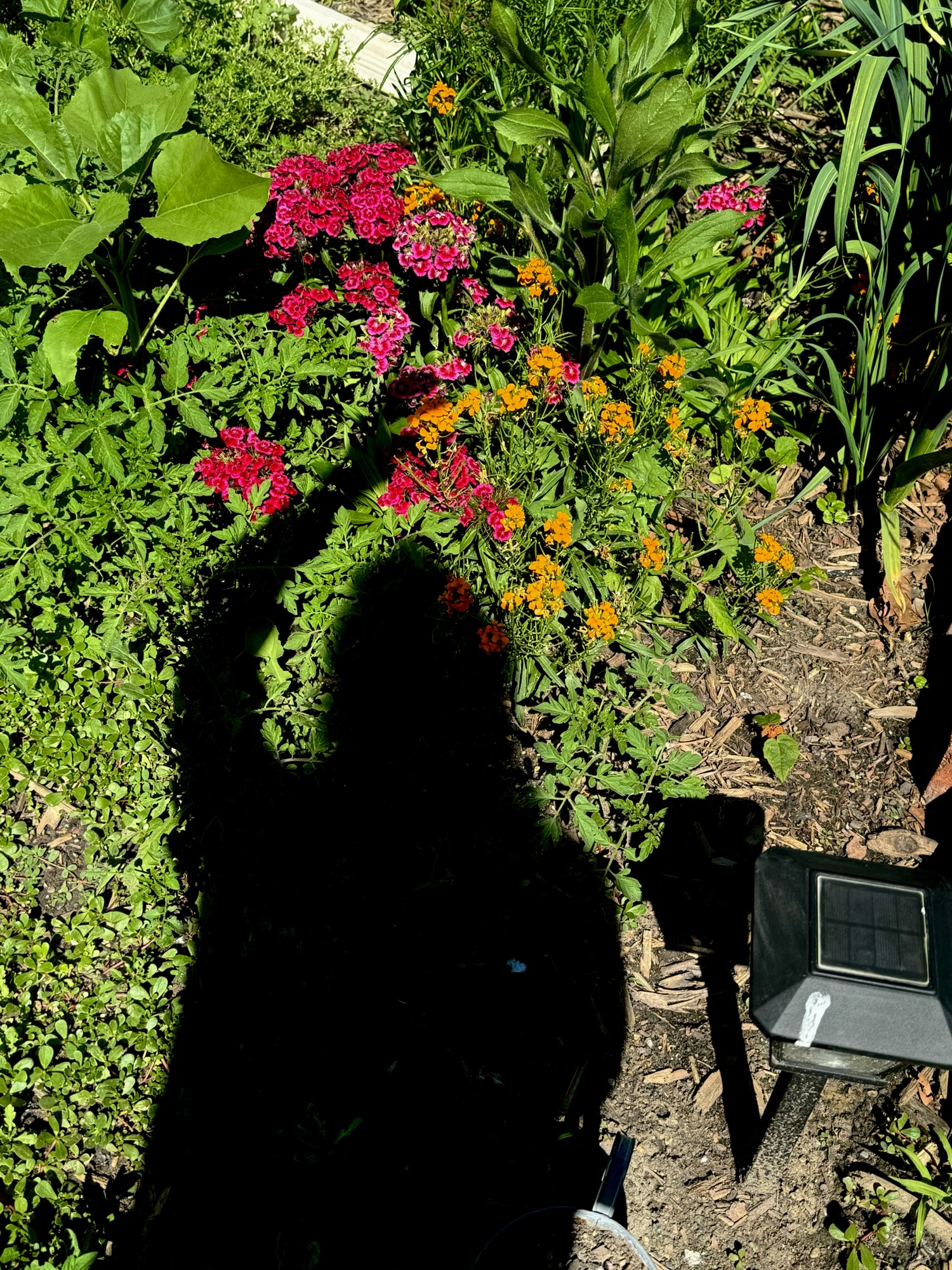

Many years ago, a good friend and I began merging our business operating systems with the natural seasons.
We are both from Michigan, where the year does not politely suggest change.
It turns.
Winter demands protection.
Spring asks for preparation.
Summer reveals what took root.
Fall shows what is ready to harvest, release, or repair.
Between the two of us, we have nearly a century of experience living inside those cycles. So it made sense that our work began to follow them too.
I had language for systems.
She had language for people.
Together, we started noticing something neither of us could have built alone:
Healthy systems are not forced into existence.
They are observed, tended, tested, repaired, and grown.
That is true in business.
It is true in families.
It is true in communities.
It is true in the body.
And it is true in the garden.
Dynamic people in the same room can create chaos or harmony.
The difference is frequency.
When two people are calibrated toward trust, humility, shared value, and honest feedback, they can create something neither could have created alone.
When they are not calibrated, the same energy becomes noise.
That has been one of the clearest lessons of my life.
Excellent collaboration does not always look polished in the beginning.
Sometimes it looks like struggle.
Sometimes it looks like two people laughing through recorded conversations that make no sense to anyone else.
Sometimes it looks like challenge.
Sometimes it looks like both people being willing to ask:
What are we actually building?
Who does this serve?
Is this still creating value?
Do we keep going?
Do we pause?
Do we come back next season?
That level of trust does not come from avoiding tension.
It comes from surviving tension without destroying the relationship.

I have seen the same pattern inside teams.
Years ago, I led a team that changed me.
The team was not the problem.
The environment was.
The people were capable, creative, invested, and willing to grow. When the constraints were clear and the trust was real, they opened up. They told the truth about their strengths and weaknesses. They divided the work. They held each other accountable. They created momentum.
That is what leadership can do when it respects the whole person.
But even a strong team cannot thrive forever inside an environment that is not designed for growth.
That experience drove me deeper into culture work.
Because once you see what people can become under the right conditions, you cannot unsee it.
And once you see what systems do to people under the wrong conditions, you cannot pretend the damage is personal failure.
Sometimes the person is not the defect.
Sometimes the process is.

This is where observation matters.
Behavioral observation is simple at its root:
What does the human do next?
What does the dog do?
What does the plant do?
What does the team do?
What does the family do?
What happens after pressure enters the system?
In the garden, I practice this every day.
If I move the plant into more sun, what happens?
If I give the roots more space, what happens?
If I let the vine grow unchecked, what happens?
If I pull too hard, what breaks?
If I maintain it consistently, what thrives?
The same questions apply to people.
What happens when someone is overwhelmed?
What happens when someone asks for help?
What happens when someone is misunderstood?
What happens when feedback is offered?
What happens when trust is tested?
That is not judgment.
That is observation.

And observation gives us the chance to respond with more wisdom.
This season of my life has required that kind of observation at every level.
My body.
My family.
My work.
My writing.
My nervous system.
My home.
My relationships.
My capacity.
After several chronic diagnoses and a long season of medical uncertainty, I am learning what it means to live with better information.
Not as an excuse.
As a map.
There are things I used to force myself through because I did not understand the cost.
There are things I used to compensate for so automatically that I forgot compensation was happening.
There are ways I adapted so completely that other people assumed I was fine because I looked fine.
Now I am relearning.
How much light can I tolerate?
How much noise?
How much activity?
How much conversation?
How much planning?
How much responsibility?
How much recovery?
This is not about becoming fragile.
It is about becoming accurate.
Accuracy is a form of safety.
That is also true in leadership.
When someone comes into work exhausted, dysregulated, distracted, or under pressure, the first question should not be:
Why are they failing?
A better question is:
What is happening in the system around this person?
That does not remove accountability.
It improves it.
Because accountability without context often becomes punishment.
Context without accountability becomes avoidance.
Healthy leadership needs both.
Care and standards.
Grace and structure.
Trust and truth.
One of the most valuable questions I have learned to ask is:
“How did you hear what I just said?”
That question can change everything.
It creates space between intention and impact.
It allows clarification before assumption hardens into conflict.
It protects trust before damage becomes expensive.
It turns feedback into shared learning instead of personal threat.
This is continuous improvement at the human level.
Not a survey.
Not a slogan.
Not a performance metric designed to serve only the people upstream.
Real feedback.
Real listening.
Real adjustment.
Real respect.
Respect every individual has always been one of the pillars I return to.
Every individual.
Every soul.
Every vessel carrying a life we cannot fully see.
That includes the people we agree with.
The people we lead.
The people we love.
The people who challenge us.
The people whose histories we do not understand.
The people whose nervous systems react differently because life has taught them different risks.
If we want better families, better teams, better communities, and better organizations, we have to become more skilled at meeting reality without immediately assigning blame.
What happened?
What changed?
What did the human do next?
What did I do next?
What did the system reward?
What did the system punish?
What needs to be repaired?
What needs to be released?
What needs to be redesigned?
The older I get, the less interested I am in sales pitches about success.
I am interested in what holds under pressure.
I am interested in trust that survives erosion.
I am interested in collaboration that can pause without collapsing.
I am interested in leadership that can ask better questions.
I am interested in systems that do not consume the people they depend on.
I am interested in families that can learn without rewriting every painful chapter.
I am interested in beauty that still exists in the middle of repair.
Because it does.
Even now.
Especially now.
The peonies are blooming.
The garden is teaching.

The body is speaking.
The work is reorganizing.
The light is becoming easier to look at.
And I am still here, observing.
Still learning.
Still asking the next question.
Still choosing to build with people who can hold both pressure and possibility.
That is where harmony begins.
Not when everything is easy.
When the frequency is honest.