


In quality management, manufacturing, engineering, and applied science, a single data point is rarely the story.
The run is the story.
The trend is the story.
The shift in the process mean is the story.
The movement of the centerline is the story.
Anyone can overreact to a single point. Professionals learn to watch the pattern.
What’s fascinating is that nature works exactly the same way.
A single migrating goose tells you very little.
A migration pattern tells you a season is changing.
A single frog crossing a road means nothing.
A frog run tells you spring has arrived.
A single monarch butterfly is an observation.
A migration is a signal.
Nature doesn’t announce itself through isolated events.
It announces itself through runs.
And so do people.
As a young woman learning statistics, process control, GD&T, tolerance bands, upper and lower specification limits, and process capability, I remember hearing people talk about “data runs.”
The phrase always struck me as funny.
A run.
As though data itself were some kind of wildlife moving across the landscape.
At the time I understood the mathematics.
What took me longer to understand was the wisdom behind it.
A run isn’t important because of any individual point.
A run matters because it reveals direction.
It tells us whether a system is stable, drifting, improving, degrading, or transforming.
One point is noise.
A run is information.
Looking at my health data recently, I realized I was seeing exactly what quality professionals are trained to look for.
Not a miracle.
Not a breakthrough.
Not a dramatic event.
A run.
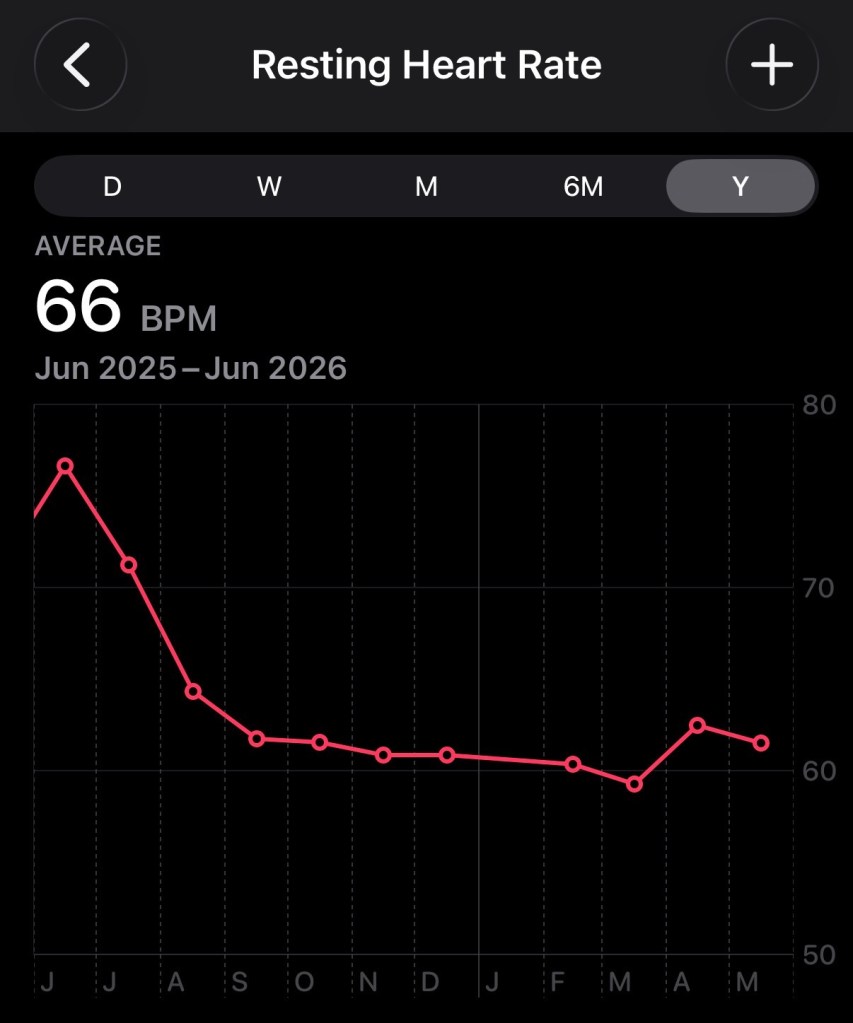
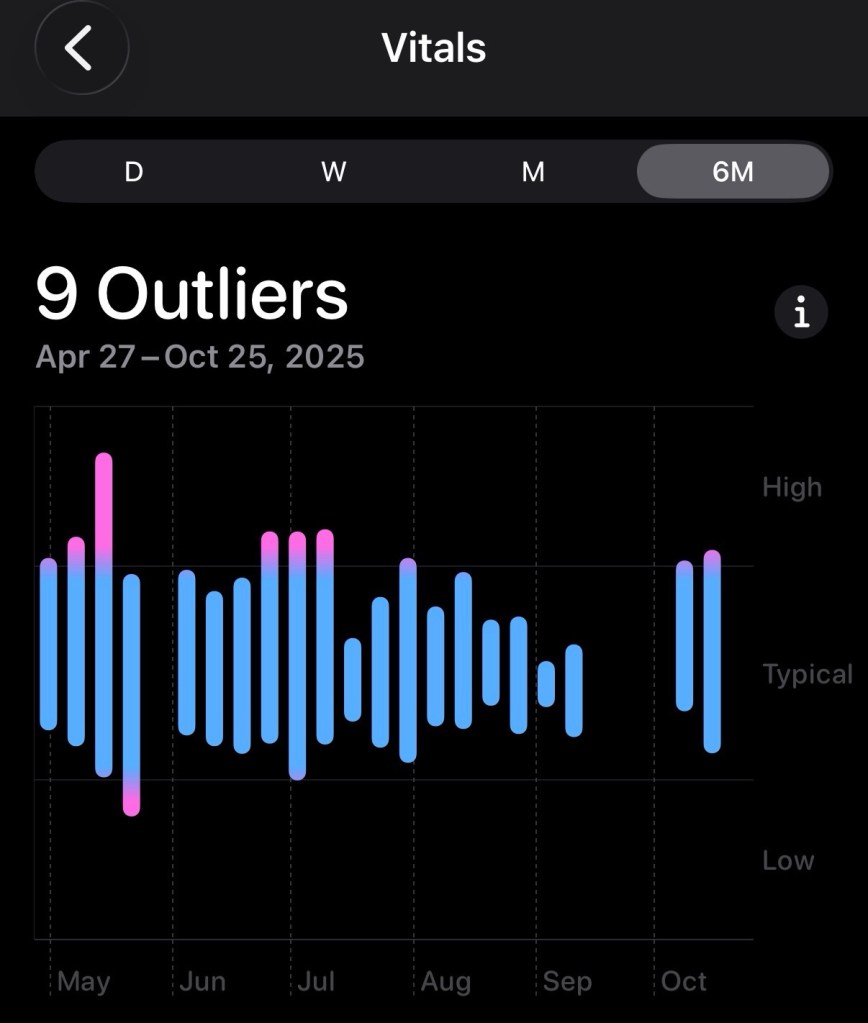
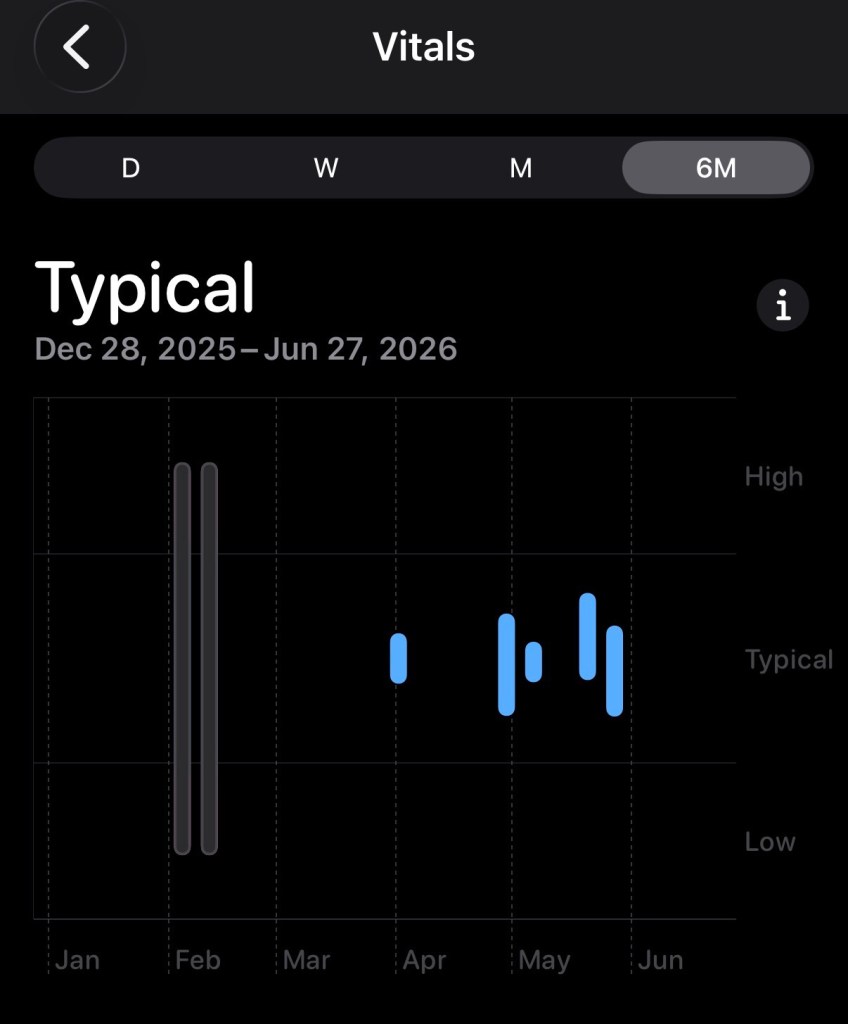
My resting heart rate had been moving steadily downward for months.
My sleep patterns had become more stable.
No single day felt especially significant.
In fact, many days felt frustratingly ordinary.
But the annual chart revealed something that daily experience concealed.
The system had shifted.
The older I get, the more I think human beings misunderstand change because we insist on evaluating ourselves as individual data points.
How do I feel today?
How productive was I this week?
Did this medication work immediately?
Did this decision pay off right away?
Nature doesn’t work that way.
Neither do people.
The oak tree doesn’t check its progress every Tuesday.
The river doesn’t evaluate whether today’s erosion was sufficient.
The migrating birds don’t abandon the journey because today’s flight was unimpressive.
The pattern only becomes visible across enough observations.
This may be why I have preferred a Word of the Year over traditional resolutions for more than a decade.
One word rarely changes a life.
One year rarely changes a life.
But a decade of direction can.
Just as a process engineer watches a trend emerge over hundreds of observations, I can now look back across years of words and see a trajectory that was invisible while I was living it.
The run tells the story.
Not the point.
Perhaps that is one of the most important lessons both nature and statistics have taught me.
We are far too eager to judge ourselves from a single observation.
The real question is not:
“What happened today?”
The real question is:
“What direction is the run moving?”
Because that is where seasons reveal themselves.
That is where rivers carve canyons.
That is where healing becomes visible.
And that is where a life, viewed from sufficient distance, begins to tell the truth.
 Slingshot Designs