
Most people spend their lives trying to predict the future. The people who navigate uncertainty learn something far more useful.

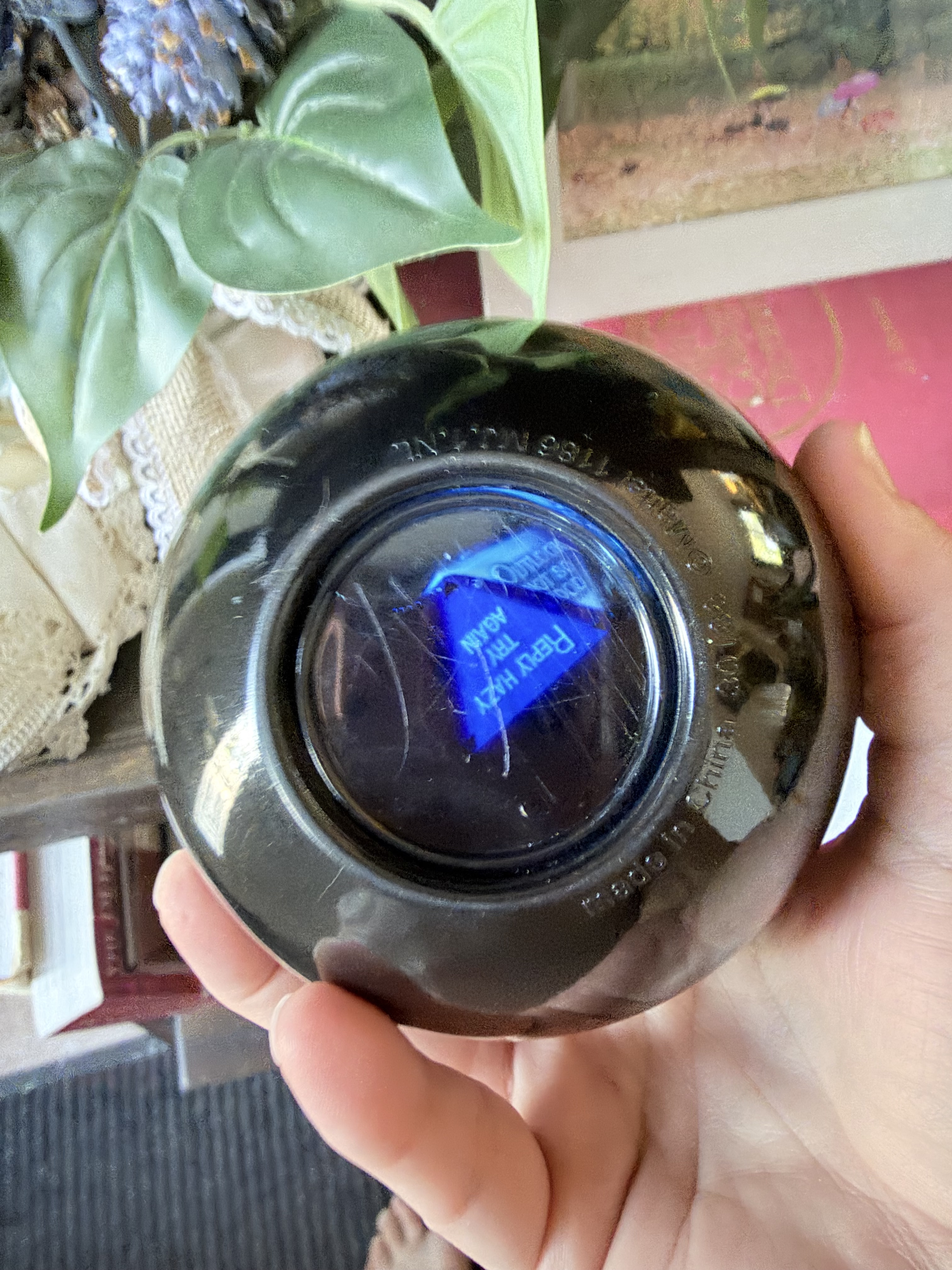
I keep a Magic 8 Ball in my bathroom. Not because I believe it predicts the future, but because it reminds me that most things worth doing require preparation, not certainty.
Every morning starts the same way.
Coffee. Garden. Inventory.
I walk the property looking for what changed overnight.
Did the deer get into anything?
Does something need water?
What quietly succeeded while I was sleeping?
Before I head outside, I pass a Magic 8 Ball sitting in my bathroom.
Most people assume it’s there as a joke.
It isn’t.
I keep it there as a reminder.
Not everything can be predicted.
Most things don’t need to be.
The garden reinforces that lesson every day.
No matter how carefully I plan, something unexpected will happen. A storm will arrive. A pest will appear. A plant will outperform expectations. Another will struggle despite receiving identical care.
The goal was never certainty.
The goal was preparation.
That lesson has followed me through every chapter of my professional life.
For years, my work centered on understanding systems.
I negotiated supplier agreements. Built training programs. Managed quality systems. Investigated failures. Worked inside organizations ranging from world-class operations to environments held together by determination, duct tape, and hope.
The industries changed.
The job titles changed.
The lesson never did.
Understand the system.
Understand the pressure.
Understand the human.
Then decide what happens next.
Early in my career, I believed preparation meant identifying every possible risk in advance.
Control plans.
Risk assessments.
Contingency plans.
Contract language.
Escalation procedures.
The work mattered because the consequences mattered.
A missed requirement, an overlooked assumption, or a poorly understood risk could cost time, money, relationships, and trust.
What many people don’t realize is that the value of these tools was never the paperwork.
The value was the thinking.
The exercise forced us to slow down and ask better questions.
What assumptions are we making?
What could change?
What pressures exist?
What happens if this fails?
Who is impacted?
The document was simply evidence that the conversation happened.
Unfortunately, many organizations confuse documentation with preparation.
The paperwork gets completed.
The thinking does not.
One of the unintended consequences of spending years in quality management is that eventually everything starts to look like a defect.
Processes.
Products.
Systems.
Organizations.
Leaders.
Sometimes entire cultures.
The goal isn’t malicious.
The goal is improvement.
But if we’re not careful, we begin focusing so intensely on what is wrong that we lose sight of what is working.
I watched organizations hold people to impossible standards.
I watched leaders absorb pressure until they became overwhelmed by it.
I watched teams carrying burdens that never appeared on any organizational chart.
And if I’m being fair, I did it too.
Not because I expected perfection.
Because I believed responsibility meant carrying more.
More problems.
More decisions.
More pressure.
More people.
Over time, that becomes unsustainable.
Not just for an individual.
For an entire system.
What changed my perspective wasn’t another certification, another contract, or another management framework.
It was people.
The people everyone else missed.

Most conflict begins when people are looking at the same situation through different lenses.
Some of the most important leadership lessons of my career came from individuals who never held executive titles.
People navigating circumstances most organizations never even knew existed.
People carrying burdens that never appeared in a process flow, organizational chart, or performance review.
Those experiences changed the questions I asked.
Instead of asking:
“What went wrong?”
I started asking:
“What pressure was this system under when it failed?”
That single question changes everything.
Because people are not isolated events.
Organizations are not isolated events.
Communities are not isolated events.
Everything exists within a larger system.
Every behavior has context.
Every outcome has conditions.
Every result has a story.
That realization eventually became the foundation for work I would later call The Cardinal Rule.
Long before it became a workshop, a framework, or a visual model, it was simply an observation.
Most conflicts aren’t caused by bad people.
Most failures aren’t caused by bad intentions.
Most friction exists because people are looking at the same situation through different lenses.
One person sees relationships.
Another sees information.
Another sees opportunities.
Another sees risks.
None of them are necessarily wrong.
They’re simply looking at different parts of the board.
The challenge isn’t deciding who is right.
The challenge is understanding enough of the system to see what everyone else sees.
Today, my work looks very different than it did twenty years ago.
The industries are different.
The conversations are different.
The problems are different.
Yet somehow the work remains remarkably familiar.
I still study systems.
I still identify patterns.
I still look for pressure points.
I still help people understand what they’re seeing.
The difference is that the systems are now often human instead of mechanical.
Families.
Communities.
Leadership teams.
Organizations.
Partnerships.
The principles remain the same.
Understand the system.
Understand the pressure.
Understand the human.
Then decide what happens next.
Every morning I walk past a toy that claims to know the future.
Then I walk into a garden that proves nobody does.
The point was never prediction.
The point was preparation.
Build the relationships.
Learn the terrain.
Understand the system.
Pay attention to the pressure.
Stay curious about the humans involved.
The future will arrive whether we’re ready for it or not.
Preparation doesn’t guarantee success.
It simply increases the odds that when uncertainty arrives, we’ll know where to begin.
And most days, that’s enough.
What helps you prepare for uncertainty?