
For years, I have studied pressure patterns.
Not because people are machines.
Not because everyone behaves the same way.
Because under pressure, patterns emerge.
Pressure compresses options.
Pressure narrows attention.
Pressure encourages certainty.
And certainty is often where discernment begins to fail.
That realization has followed me through boardrooms, classrooms, hospitals, government offices, community organizations, and family life.
The pattern remains remarkably consistent.
Under sustained pressure, people stop seeing the whole picture.
They begin seeing fragments.
A headline becomes a person.
A diagnosis becomes an identity.
A disagreement becomes a threat.
A moment becomes a lifetime.
The fragment becomes the story.
And once that happens, decisions become easier to make and harder to reverse.
⸻
Years ago, I spent a brief chapter of my life substitute teaching.
I entered the classroom believing I had a strong understanding of leadership and learning.
What I discovered was a gap.
I was excellent at motivating people.
I was excellent at inspiring people.
I was not particularly skilled at classroom management.
That distinction mattered.
In organizations, there is often time to develop trust.
People evolve.
Teams mature.
Relationships deepen.
In a classroom, there is much less time.
Boundaries matter.
Consistency matters.
Accountability matters.
The lesson followed me back into organizations.
Many leaders know how to create excitement.
Far fewer know how to create sustainable accountability.
The result is often a room full of inspired people with nowhere to direct that energy.
Excitement without structure eventually becomes frustration.
Potential without application eventually becomes disappointment.
Leadership requires both.
⸻
The same principle applies far beyond classrooms and workplaces.
It applies to communities.
It applies to institutions.
It applies to families.
It applies to systems designed to protect people.
Every system must balance action with discernment.
Every system must balance vigilance with judgment.
Every system must account for the possibility of being wrong.
That is where many modern conversations become difficult.
Nobody wants genuine threats ignored.
Nobody wants vulnerable people left unprotected.
Nobody wants real warning signs dismissed.
Those concerns are valid.
But there is another side to the equation.
What happens when assumptions become conclusions?
What happens when fear becomes certainty?
What happens when a fragment is mistaken for the whole picture?
The consequences are rarely measured with the same intensity.
Yet they are real.
⸻
Perhaps that is why the image of old photographic film keeps returning to mind.
As a child, I remember holding negatives up to the light.
At first, the image looked wrong.
Dark appeared light.
Light appeared dark.
The picture existed, but it was incomplete.
Only when light passed through it did the image begin to emerge.

Discernment often works the same way.
The first impression is rarely the full picture.
The first explanation is rarely the only explanation.
The first emotional reaction is rarely the most accurate interpretation.
The image develops slowly.
The challenge is resisting the urge to decide before it does.
⸻
This is one of the reasons I continue to believe that runs matter more than points.
A single observation tells us very little.
A pattern tells us much more.
A single practice does not define an athlete.
A season reveals an athlete.
A single decision does not define a person.
A pattern of decisions reveals character.
A single difficult day does not define a family.
The long run tells the story.
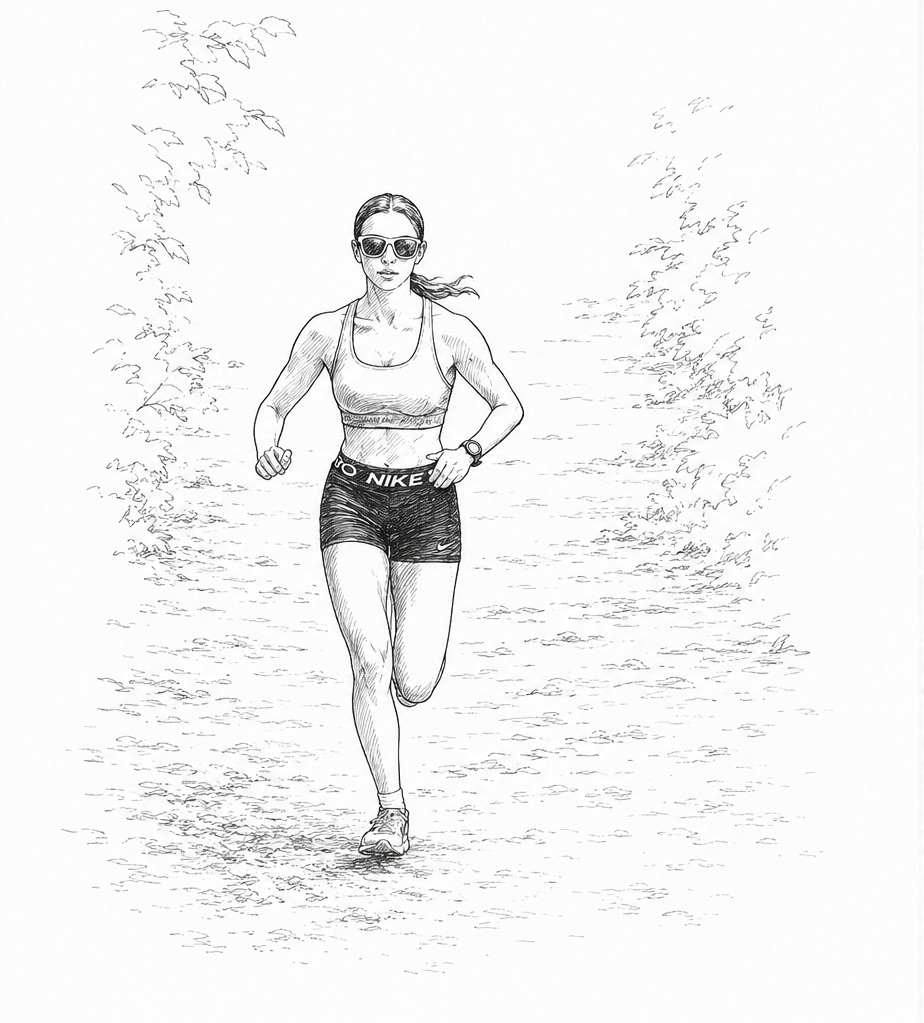
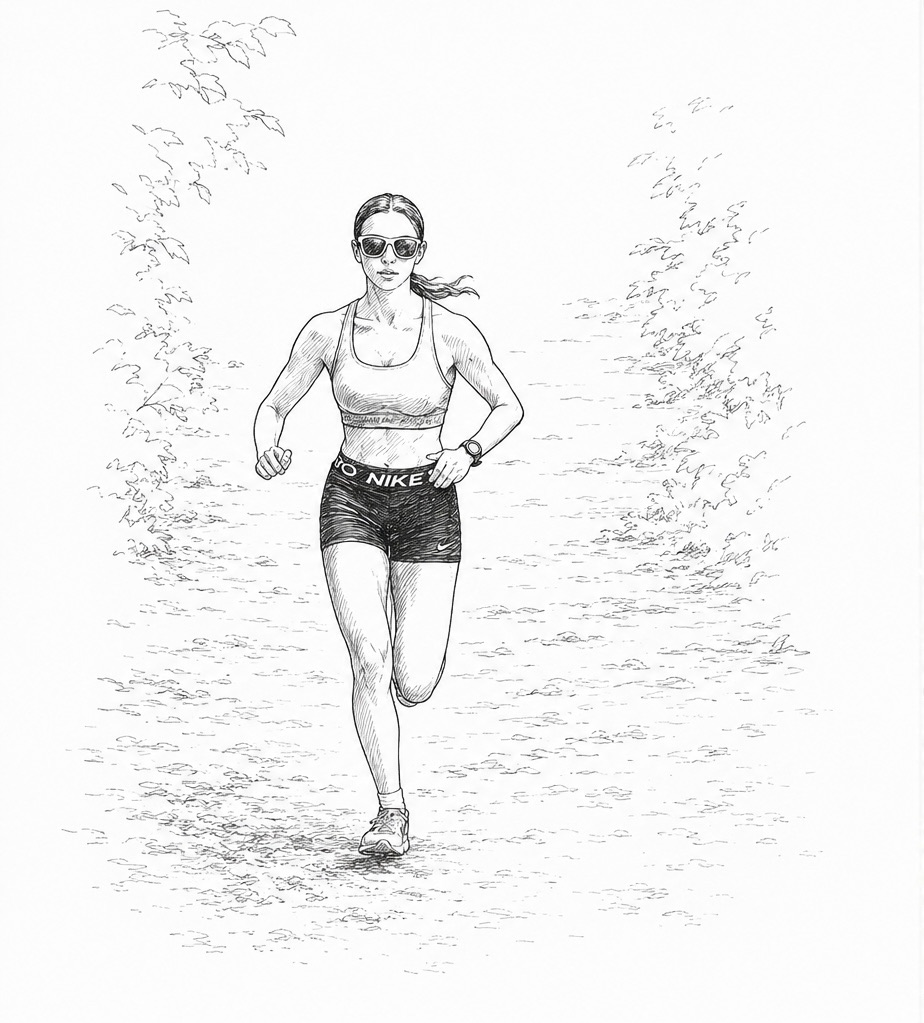
My daughter teaches me this lesson constantly.
She is an endurance athlete.
Most teenagers are sleeping when she wakes up.
Without an alarm, she gets up, prepares herself, goes to practice, and puts in the work.
Not occasionally.
Consistently.
The most meaningful change is not her athletic performance.
It is her judgment.
Years ago, accountability was difficult for her.
Like many children, responsibility often found a convenient destination somewhere else.
Usually a sibling.
Today, something different is emerging.
She makes mistakes.
Sometimes significant ones.
Then she takes ownership.
Immediately.
She adjusts.
She learns.
She moves forward.
That progression did not happen overnight.
It happened through repetition.
Through trust.
Through consequences.
Through support.
Through reflection.
The run tells the story.
⸻
Perhaps that is the concern many parents share today.
Not fear of technology.
Not fear of institutions.
Not fear of change itself.
The concern is whether we are creating enough space for discernment to develop.
Whether we are teaching young people how to think before teaching them what to think.
Whether we are preserving curiosity before replacing it with certainty.
Whether we are allowing the image enough time to develop.
Because once certainty arrives too quickly, growth often stops.
The picture freezes.
The pattern disappears.
And everything that could have been is reduced to what someone believed they saw in a single moment.
The picture develops slowly.
The run tells the story.
Both are worth remembering.
 Slingshot Designs